


Fotó: Gara Kálmán


Nyomvonaltérkép
A 2-es villamos a Nagyállomás és a Hunyadi János utca között, az 1-essel közös pályán halad majd.
Az új vonalszakasz a
Hunyadi utca – Csemete utca – Dózsa György utca – Nádor utca – Thomas Mann utca – Békessy Béla utca – Doberdó utca – Böszörményi út – Békessy Béla utca
nyomvonalon épül.
Kattintson a képre a nagyításhoz
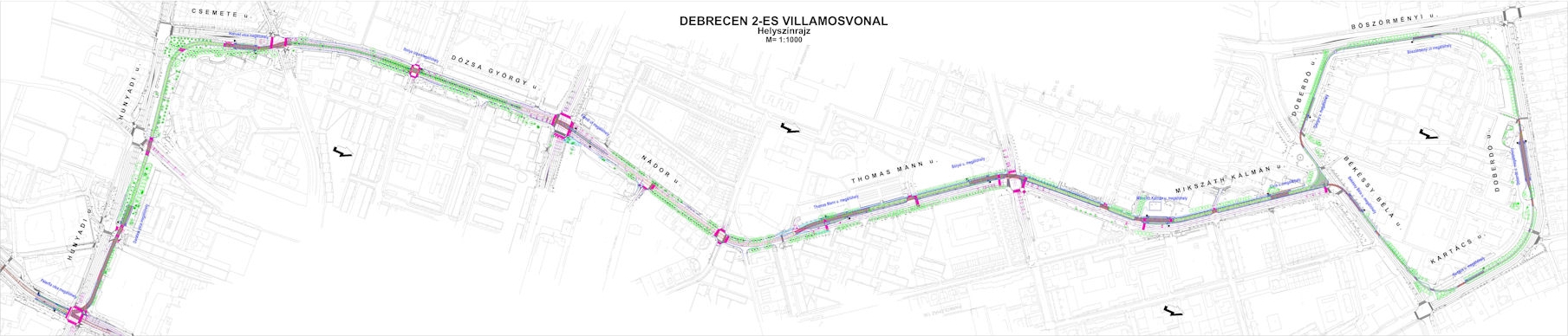
A beruházás a pálya megépítésén kívül a pályához kapcsolódó felsővezeték-rendszer, az áram-visszavezető rendszer, az egyenáramú földkábel-hálózat, a peronberendezések, a fedezőjelző építését, valamint a szükséges útkorrekciót és a közműkiváltásokat is magába foglalja. A szakasz nagy részén a kétvágányú pálya az út szélén halad, majd a Honvéd utcai kereszteződésében középfekvésűre vált át, később pedig a Dózsa György utcán a meglévő zöldsáv két oldalán, zöldpályán halad. A Békessy Béla utcától egyvágányú pályaként megy tovább a Kartács utca nyugati, valamint a Doberdó utca déli oldalán. A 2-es villamos külső végállomását a Doberdó utcában, a meglévő buszvégállomásnál, a tárolóvágánnyal együtt alakítják ki. Az egyvágányú pálya a végállomás után a Böszörményi út keleti oldalán és a Békessy Béla utca északi oldalán visszatér a kétvágányú pályaszakaszhoz.
